(925) 837-7745
This is some text inside of a div block.
Book Appointment
Book Appointment
.png)
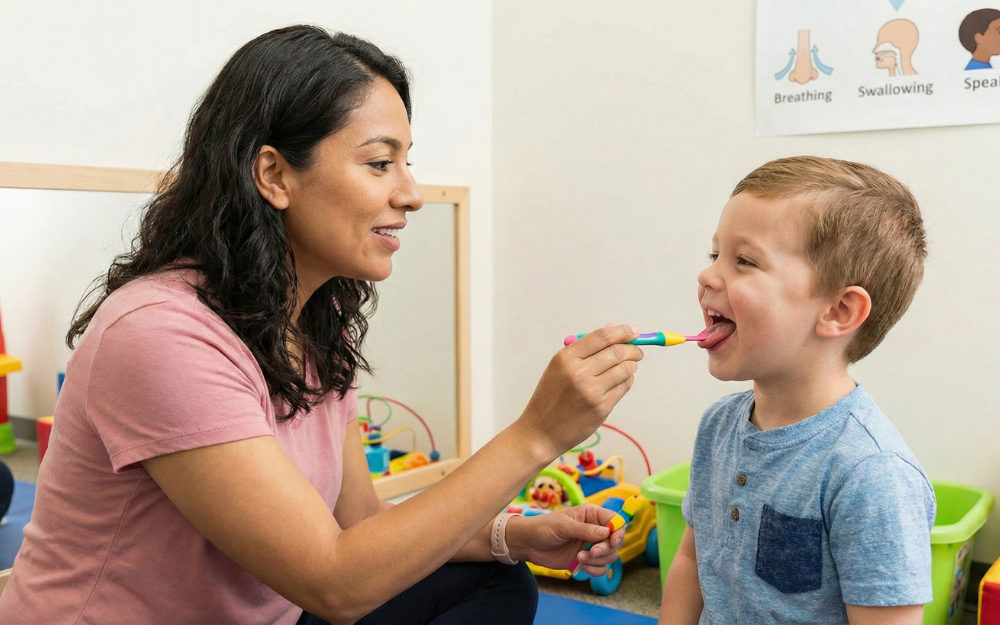
When families first hear about myofunctional therapy, they often ask:
"What exactly is it?"
The simple answer is that myofunctional therapy helps retrain the muscles of the tongue, lips, cheeks, and jaw so they can work together more efficiently.
But the bigger answer is this:
The way a child breathes, swallows, chews, rests their tongue, and holds their lips can influence how they grow.
At Flourish, we often say that structure and function work together. Creating healthy growth isn't just about having enough space. It's also about teaching the body how to use that space well. That's where myofunctional therapy comes in.
Many parents are surprised to learn that the muscles of the mouth do much more than help us eat and talk.
They also influence:
Because children are still growing, these patterns matter. Small habits repeated thousands of times each day can gradually influence how the face, jaws, and airway develop That's why we pay so much attention to oral function early in life.
When the muscles of the mouth aren't working efficiently, children often develop compensations.
Some of the most common include:
These habits often develop for a reason.
Sometimes there isn't enough room for the tongue. Sometimes enlarged tonsils or adenoids are affecting breathing. Sometimes a tongue tie has limited mobility. Sometimes the body has simply adapted to years of compensation.
Our job is to understand the "why" behind the habit, not just the habit itself.
Think of myofunctional therapy as physical therapy for the muscles of the mouth and airway. The goal isn't perfection. The goal is coordination.Through simple, age oppropriate exercises, children learn how to:
Over time, these changes can support healthier breathing, sleep, and development.
One of the biggest misconceptions in airway focused care is that creating space automatically fixes function.
Sometimes a child can have:
Creating space is important. But learning how to use that space is equally important. This is why we often recommend myofunctional therapy alongside expansion, tongue tie treatment, or airway-focused care The best outcomes happen when structure and function improve together.
Every child is different, but we commonly recommend an evaluation for children who:
Often, these children aren't lazy or unwilling.
Their bodies have simply learned patterns that are no longer serving them well.
One of the things I love most about myofunctional therapy is that it doesn't rely on dramatic interventions. Instead, it focuses on small, consistent changes that add up over time. Just as poor habits can gradually shape development, healthy habits can help guide it in a better direction.
It's helping a child develop the skills they need to breathe, sleep, eat, speak, and grow more efficiently.

To schedule a consultation, please click the button, submit your information, and we’ll get back to you shortly.










.png)
.png)
.png)
.png)
.png)
.png)
.png)
.png)
.png)
.png)
.jpg)
.png)
.png)
.jpg)
.png)


.png)
.jpg)